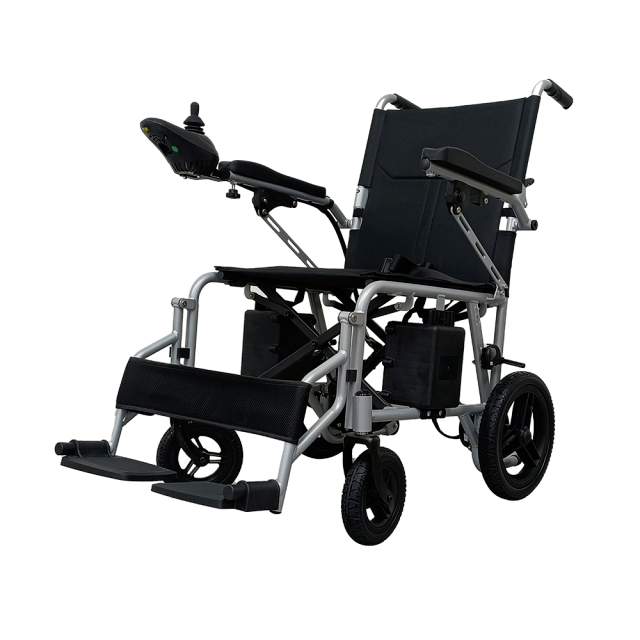
Airline Travel with Electric Wheelchairs: Complete 2026 Guide to Rules, Preparation, and Procedures
Air travel presents unique challenges for electric wheelchair users, but with proper preparation and knowledge of airline regulations, it is entirely manageable. Federal aviation rules establish specific protections for mobility device users, but policies vary between airlines and aircraft types. This comprehensive guide covers everything from pre-flight planning and battery regulations to gate-check procedures and arrival protocols, so you can travel confidently with your electric wheelchair.
Understanding Airline Regulations for Electric Wheelchairs
In the United States, the Air Carrier Access Act (ACAA) requires airlines to accommodate passengers with disabilities and their mobility devices, including electric wheelchairs. Airlines cannot refuse transportation based on mobility disability, and they must allow wheelchairs as checked or gate-checked items at no additional charge.
Internationally, regulations vary by region. The European Union’s Regulation 1107/2006 establishes similar protections for flights departing from or arriving within EU countries. Other countries have their own rules, so always verify with your specific airline and departure country before booking.
Despite these protections, airlines have significant discretion regarding how they handle battery-powered mobility devices. The primary concern for airlines is battery fire risk in the cargo hold. Lithium-ion batteries, which power most modern electric wheelchairs, are classified as dangerous goods under aviation rules, and specific packaging and labeling requirements apply.
Battery size is the most important regulatory factor. Most airlines accept lithium-ion batteries under 300 watt-hours (Wh) without special approval. Batteries between 300 and 400 Wh usually require advance airline approval. Batteries exceeding 400 Wh are generally prohibited on passenger flights, though exceptions exist for certain medical mobility devices with prior approval.
Pre-Flight Planning: Steps to Take Before Booking
Start planning at least two weeks before your trip, preferably before purchasing airline tickets. First, confirm your wheelchair battery specifications. Calculate watt-hours by multiplying battery voltage by amp-hour rating. For example, a 24-volt, 20-amp-hour battery equals 480 Wh, which exceeds the standard 300 Wh limit on many airlines.
If your battery exceeds standard limits, contact the airline’s special assistance department directly. Do not rely on general customer service representatives, who often lack specific knowledge of mobility device battery rules. Ask to speak with the dangerous goods or accessibility coordinator, and get approval in writing via email for your records.
Next, research your specific aircraft type. Smaller regional jets have smaller cargo doors and limited cargo space, which can make transporting larger electric wheelchairs difficult or impossible. Wide-body aircraft typically have more cargo room and are easier for wheelchair transport. If possible, book flights on larger aircraft to reduce handling risk.
Notify the airline of your electric wheelchair at the time of booking or at least 48 hours before departure. Most airlines allow you to add wheelchair assistance requests during online booking, but follow up with a phone call to confirm the specific details of your power chair. Request a bulkhead seat or aisle seat with movable armrest for easier transfer.
Battery Preparation and Safety Requirements
Proper battery preparation is the single most important factor in smooth airline travel with an electric wheelchair. Airlines have rejected boarding for passengers with improperly prepared batteries, so follow requirements exactly.
For lithium-ion batteries:
- Remove batteries from the chair if required by the airline. Some airlines allow batteries to remain installed if they are securely mounted and the chair’s power can be completely disconnected.
- Cover battery terminals with tape or plastic caps to prevent short circuits. Loose metal objects in cargo can contact exposed terminals and cause fires.
- Place removed batteries in protective carrying cases. They must be carried in the cabin with you, not checked in luggage. Most airlines allow two spare lithium-ion batteries per passenger for mobility devices.
- Label batteries clearly with their watt-hour rating. Original manufacturer labels are best, but if labels are worn, print the specifications and tape them securely to the battery casing.
For lead-acid batteries:
- These are generally allowed in cargo holds as long as they are properly secured in the wheelchair and terminals are protected.
- The battery must be leak-proof and mounted in an upright position.
- Some airlines require the battery to be disconnected and terminals insulated.
Document everything. Take photos of your battery labels, terminal covers, and overall wheelchair condition before checking it. This creates evidence if damage occurs during transport.
Wheelchair Preparation for Air Travel
Beyond batteries, prepare the chair itself to minimize damage and speed up handling.
First, remove all loose accessories that could fall off or break during transport. This includes cup holders, phone mounts, storage baskets, oxygen holders, canopy frames, and cushion covers. Pack these items in your carry-on or checked luggage separately.
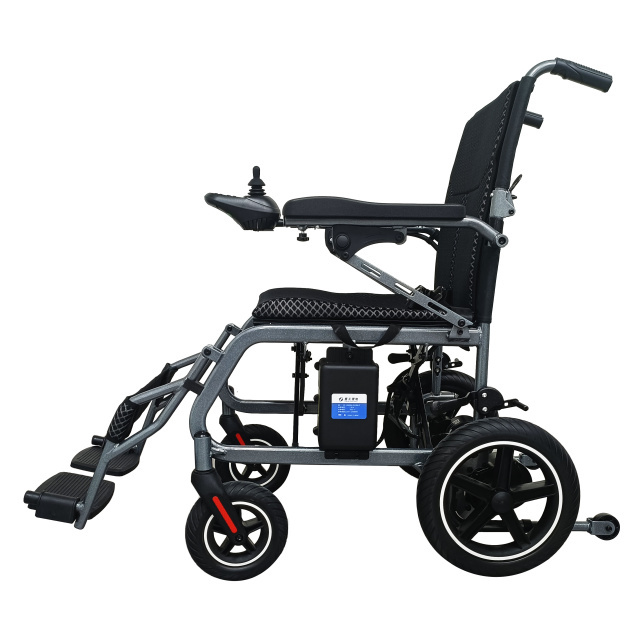
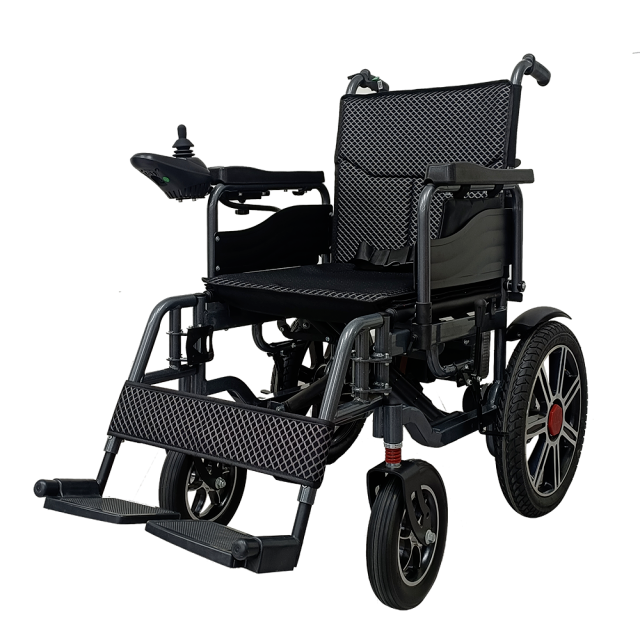
Secure moving parts. Tape swing-away armrests, footrests, and joystick arms in their closed or stowed positions. Use bubble wrap or foam padding around the joystick controller to protect it from impact. If the joystick is removable, detach it and carry it with you in the cabin.
Deflate pneumatic tires slightly to account for pressure changes at altitude. Overinflated tires can rupture in unpressurized cargo holds. Consult your tire manufacturer for recommended travel pressure.
Attach clear, durable identification tags to the chair with your name, flight information, and contact number. Include instructions for folding or operating the chair if it has unusual features. Use a tag with bright color so baggage handlers can easily identify it as a mobility device requiring special care.
Take dated photos of the entire chair from multiple angles before checking it. Photograph any pre-existing scratches or damage. These photos are critical for filing damage claims if the airline mishandles your equipment.
At the Airport: Check-In and Security Procedures
Arrive at the airport earlier than standard recommendations—at least two hours before domestic flights and three hours before international flights. Electric wheelchair processing takes additional time, and you do not want to feel rushed.
Proceed to the check-in counter with your wheelchair. Inform the agent that you will be gate-checking your electric wheelchair. Gate checking means you use your chair all the way to the boarding gate, then transfer to an airport wheelchair just before boarding. This is almost always preferable to checking the chair at the ticket counter, because it reduces handling time and keeps your chair with you longer.
You will need to complete any required battery documentation at check-in. Have your battery approval email ready and be prepared to show battery specifications. Some airlines require you to sign a liability release for battery-powered devices.
For security screening, you generally remain in your wheelchair during screening. TSA agents will perform a pat-down and may swab your chair and hands for explosive residue. They may also test your batteries. Inform officers if you have any medical devices or sensitive areas that require special handling. You can request a private screening if preferred.
After security, proceed to your gate and notify the gate agent of your electric wheelchair upon arrival. Confirm that they have noted your chair and that ground crew are prepared to handle it. Ask about boarding order—passengers with mobility needs typically board first, giving you extra time to transfer.
Boarding and Stowing Procedures
When boarding begins, you will use your electric wheelchair down the jetway to the aircraft door. At the door, you transfer to an aisle chair provided by the airline. Aisle chairs are narrow wheelchairs designed to fit down airplane aisles.
The transfer process requires careful attention. If you need assistance, clearly state how you prefer to be transferred. You can use a transfer board, ask for two-person assistance, or use other methods. Never let staff lift you by the arms alone, as this can cause injury.
Once you are seated, ground crew will take your electric wheelchair to the cargo hold. Confirm with the flight attendant that your chair has been loaded before takeoff. Request that they note your wheelchair is fragile and should be loaded last and unloaded first, if possible.
Keep all battery chargers, joysticks, and essential accessories with you in the cabin. Pack a basic repair kit with hex keys, extra fuses, and a tire repair kit in your carry-on in case of minor damage during transit.
During the flight, inform the flight attendant if you need assistance using the restroom